
Fast and Light Gannett Peak Technical Assent

Of all the highest points in each of the lower 48 states—Mt. Whitney in California, Rainier in
Washington—Wyoming’s Gannet Peak has the reputation of being the hardest, not necessarily
for the technical aspects, but for the length of the approach and the number of days it takes to
summit.
Having not climbed many other high points, I do not know for sure, but Gannett is tucked
deep in the northern Wind River Range, high on the Continental Divide. There is no short way
to get to there. Most approaches involve 25 miles or so of trail hiking, and for most people
attempting the climb, it means carrying 4-5 days of food, ropes and crampons, stiff mountain
boots, and large, mountaineering-style ice axes.
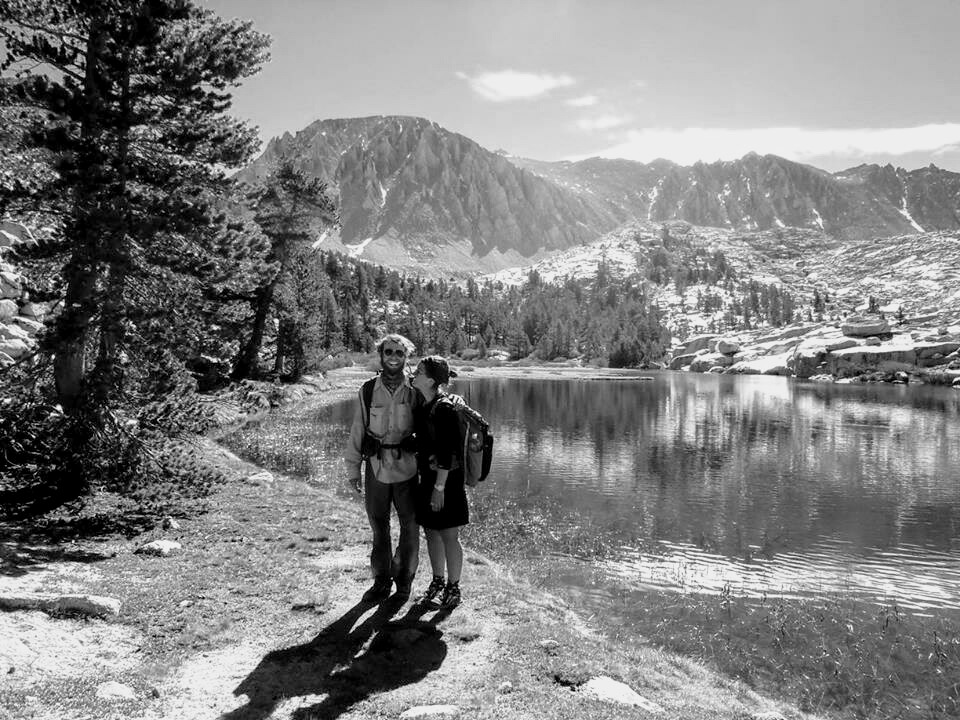
I met one of these adventurers, in the fall yellow grass of a September morning. We were hiking in from Trail Lakes in northern Wyoming. The adventurer
looked to be in his twenties, and was hunched under what I would guess was 60+ pounds of
camping and climbing gear stuffed into every pocket and slung on every loop of his large,
expedition-style pack. We stopped to chat and ask how his trip had been. He looked
exhausted and haggard and said something like, “I didn’t make it; it was an epic struggle.” He
could not believe if he wanted to try again he would have to do the 50-mile round-trip all
again.
Nikki and I were moving easily, me with my light load and Nikki with a trail running vest as
she only planned to accompany me for the first 6 miles then jog out. My pack was at 24
pounds, and both my light weight ice axes, crampons, and helmet all fit easily inside. Making my pack look more like a day pack then that of a mountaineer,
As we moved past, I reflected to Nikki how I had not mentioned that I too was on my way in
to attempt Gannet, and it would not have been obvious to anyone looking at my SWD
Wolverine with everything neatly packed on the inside. As we hiked, I talked over what
approach I would use.
The standard approach to Gannet from the East Side of the range is to start at Trail Lakes,
climb 3,000 feet up to Burro Flats, drop 1,500 feet into the Dinwoody drainage, and follow that
up for an other 1,500ft and 10+ miles, setting up for a climb up the Goose-neck Glacier Route.
It is all trail, but it is such a long approach that it is often split into multiple days by
mountaineers.
I thought I might try a different approach. Still starting at Trail Lakes, I would following the
trail as far as Burro Flats, then head southwest off-trail to the Continual Divide. From there I
would stick as close to The Divide as I could for the next 14 miles.
I knew that this was a much more challenging approach, on what promised to be an already
long day anyway. But the travel, a combination of talus scrambling and snowfields, looked so
much more interesting than the trail-pounding standard approach. While I had set out with the
hope of climbing Gannet by the seldom-attempted North Face, I brought only minimal
technical gear for such a steep, glaciated climb. To make sure I did proper risk assessment
during the climb, I very deliberately set my goal not to summit, but to explore new parts of the
mountains, accurately asses the North Face climb, and return safe. Taking the high route, off-
trail approach defiantly fit this goal.

From Burro Flats, I left the normal route to Gannet and headed off-trail up to Goat Flats at
12,000 feet. Goat Flats is a talus-strewn plateau shaped by the last ice age. I was escorted
across the boulders by a swooping Prairie Falcon, as alarmed Pikas squeaked all around me.
The rest of the day I traveled up and down over talus at around 12,500 feet. I put my
crampons on and pulled out one ice axe in order to safely cross a steep, snow-filled gully, then
continued south to the top of Downs Glacier.
Traveling on the high spine of the Wind River Range is raw and beautiful. The world falls off
below on all sides. Glaciers hang in the north-facing cirques with turquoise lakes at their toes.
There is little vegetation among the tumble of loose blocks of dark grey granite, but what
grows is hardy. The last of the summer’s pink Parry’s Primroses cling under boulders and there
was enough Mountain Sorrel leaves for a quick, tangy nibble.

As evening approached and the peaks stretched shadows over the valley to the east, I
neared the toe of Sourdough Glacier, calving icebergs into the lake. Because it was fall and all
the crevasses were visible, I strapped back on my crampons to climb the glacier for easier
travel. As I wove my way around jagged splits disappearing into the belly of the glacier, I
followed coyote tracks doing the same. The deep ice changed from teal, to royal blue as the
sun crept lower.
In the last rays of sunlight, I crossed the dived back to the top of the Grasshopper Glacier,
named for now extinct Rocky Mountain Locust, whose bodies were found frozen in the ice.
At the first dry ground, I found a spot where a boulder sheltered me from the wind and
stretched out for the night. It had been over 20 miles, mostly off-trail, with 7,000 feet of assent
and several glacier crossings. I was plenty tired, but happy to see the massive snow cap of
Gannet a few miles away.
Sleeping at 12,000 feet, the clouds felt unbelievably close as they
rushed across a star-filled sky.

I woke with the light and packed quickly, an apricot glow covering Gannet. Within an
hour I was taking my first steps on the Gannet Glacier, and starting my climb up the steep
North Side. The first bit of the glacier was relatively simple—all of the crevasse hazards were
visible, not covered by snow, and it was flat enough that I ascended without crampons or ice
axes, finding more stability with my trekking poles. Passing underneath the sheer-face of Mount
Koven to my west, I walked on firm, grippy snow until the final 1,500 feet of Gannet towered
above me—its large bergschrund crevasse darkly outlining where the glacier pulls away from
the mountain.

After a snack break to make sure I was rested and refreshed before tackling the most
technical part of my climb, it was also time for crampons and one ice axe.
I began my climb, diagonaling up with a pole in my downhill hand and an ice axe in the
uphill one. My crampons bit well in the steep snowfield. At the massive opening of the
bergschrund, I put my pole away and got out my second axe. I continued, plunging the shafts
to their full depth for security. Above the bergschrund, the pitch got steeper and icier, forcing
me to adjust the hand rest on my ice axe to allow me to swing them like hammers for a solid
purchase before moving each foot.
My choice of footwear started showing its limitations. Approach shoes were great for the
long walk in, but on the steep ice they took more care to ensure good crampon placement.


Feeling exposed over a steep fall above the bergschrund, I became very deliberate, only moving one limb at a time—testing each axe and foothold for stability before moving the next
one—until I reached the small cliff band below the summit snowfield.
New snow had fallen the previous week and not melted off the rocks, so I kept my
crampons on. Because of the slickness, I found myself needing to occasional hook my axes in
small cracks.
After the icy rock scramble, there was only a few hundred feet of steep snow to the summit,
trackless except for me and the body of a large green dragonfly.

I had the summit to myself;
turning slow circles in the unexpected calm to watch cloud shadows slide across 100-mile views
of peaks and spires disappearing in all directions. I felt a calm contentment, knowing I had
successfully combined my decades of experience traveling in the mountains with lightweight
gear and good decision-making through a long approach up difficult terrain.
By 10:30 am I was working my way down the much less technical south ridge, crampons off
and poles in hand. I had one short snowfield to plunge-step down, a small but stable snow
bridge across the Gooseneck bergschrund (which I straddled like a horse and butt-scooted
across) then a mix of snow and talus to the valley floor. I could not believe it was not even
noon. Pulling off my shoes and socks to dry my feet while taking a hot lunch break with a cup
of coffee made the climb feel like a dream. That afternoon I hiked the down the Dinwoody
River, with its teal glacial water. When I turned around, the valley perfectly framed the route I
had just climbed, and it looked so far away. I remembered the first time I saw the North Face
of Gannet from this drainage, and how intimidated I was by the prospect of climbing it even
from a base camp in traditional mountaineering style.

Now, 23 years later, I truly enjoyed summiting with my full pack and my entire camp on my
back. As I continued the hike out, I reveled at how much equipment has changed and how
much I have learned since then, and wondered what lightweight travel adventure is next.

Jeff grew up backpacking and climbing in Wyoming’s Big Horn Mountains. He has been
leading trips for NOLS since the late 90’s and guides for Andrew Skurka Adventures, and has
been a naturalist for the Nature Conservancy. Jeff is an experienced rock climber, mountaineer,
and backcountry skier. He and his partner, Nikki, have co-authored several nature guide books
and hiked the CDT in 2011. They now live outside Lander, Wyoming with many rescue dogs.
Special equipment for this trip:
Superior Wilderness Designs Wolverine pack
Stiffer approach/ trail shoe
Petzl Gully ice axes 2x one adz one hammer
Petzl Irvis hybrid crampons
Black Diamond Vision helmet
Showa Gloves


mình có lần lướt đọc mấy trao đổi trên mạng شيخ روحاني thì thấy nhắc nên cũng tò mò mở ra xem thử cho biết. mình không tìm hiểu sâu chỉ xem qua trong thời gian ngắn để quan sát bố cục cách sắp xếp جلب الحبيب các mục và trình bày nội جلب الحبيب dung tổng thể. cảm giác là các phần được trình bày khá gọn, các hurentest berlin mục rõ ràng Huren Berlin nên đọc lướt cũng không bị rối với mình như vậy là đủ để nắm tin cơ bản rồi. جلب الحبيب
👍
I really appreciated how you framed Gannett’s difficulty as less about the technical climbing and more about that 25-mile approach deep in the Wind River Range, especially while hauling 4–5 days of food and mountaineering gear. That image of meeting another adventurer in the September yellow grass made the whole thing feel so human and grounded. By the way, I keep a supplier of construction wire, tie wire, rebar supports, anchor bolts and temporary fencing for importers and distributors I like to share: https://www.leeter.cn/resources/welded-wire-mesh-suppliers-in-china/
Este tipo de publicaciones puede resultar agradable para quienes tienen interés en la simbología. Consultar el Número de la suerte no tiene por qué significar esperar que un número cambie el resultado de un acontecimiento; también puede ser simplemente una tradición personal o una forma de entretenimiento.
mình có lần lướt đọc mấy trao đổi trên mạng شيخ روحاني thì thấy nhắc nên cũng tò mò mở ra xem thử cho biết. mình không tìm hiểu sâu chỉ xem qua trong thời gian ngắn để quan sát bố cục cách sắp xếp جلب الحبيب các mục và trình bày nội جلب الحبيب dung tổng thể. cảm giác là các phần được trình bày khá gọn, các hurentest berlin mục rõ ràng Huren Berlin nên đọc lướt cũng không bị rối với mình như vậy là đủ để nắm tin cơ bản rồi. جلب الحبيب
👍
Gostei deste guia porque não apresenta o assunto de forma complicada. As informações sobre o Delta Executor são úteis para quem quer pesquisar melhor antes de escolher uma versão para utilizar.